
Course Difficulty: Intermediate

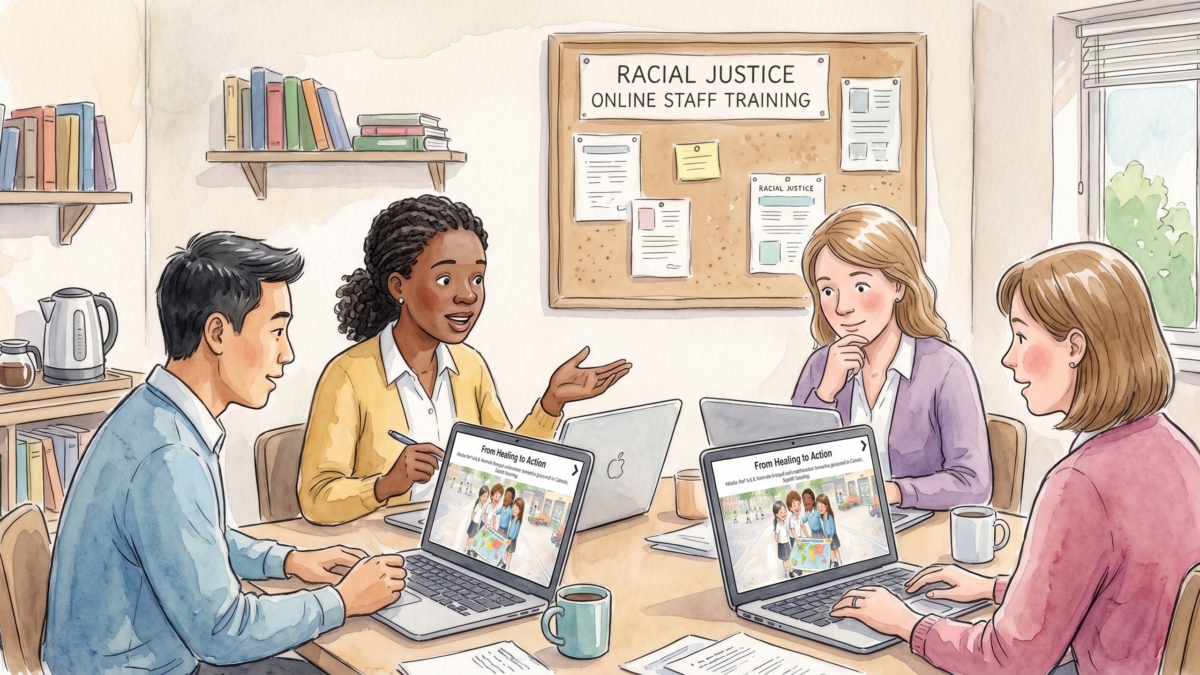
Racial Justice Training for School Staff

Lesson 1 – History or Racial Justice in the Church
From the wealth of the slave trade to the 2020 global wake-up call, this timeline charts Britain’s journey with race. It highlights the Church’s shift from a “cold welcome” to declaring racism a sin, emphasizing that structural change requires moving beyond silence to active, local participation in God’s justice.

Lesson 2: Language of Racial Justice 
Developing racial justice literacy means moving from “goodwill” to active understanding. We must name systemic racism—bias within institutional rules—and unconscious bias, our hidden prejudices. Grounded in Imago Dei, this vocabulary transforms “tolerance” into a spiritual journey of metanoia, ensuring our parishes become true homes of Gospel-led belonging.

Lesson 3: Action of Racial Justice in the School

This section moves beyond theory into practical, faith-led action using real-world school scenarios. You will master the P.A.U.S. formulaPublicly Interrupt, Address Logic, Uplift the Pupil, and Seek Repair—to ensure our school remains a sanctuary of respect for every child.
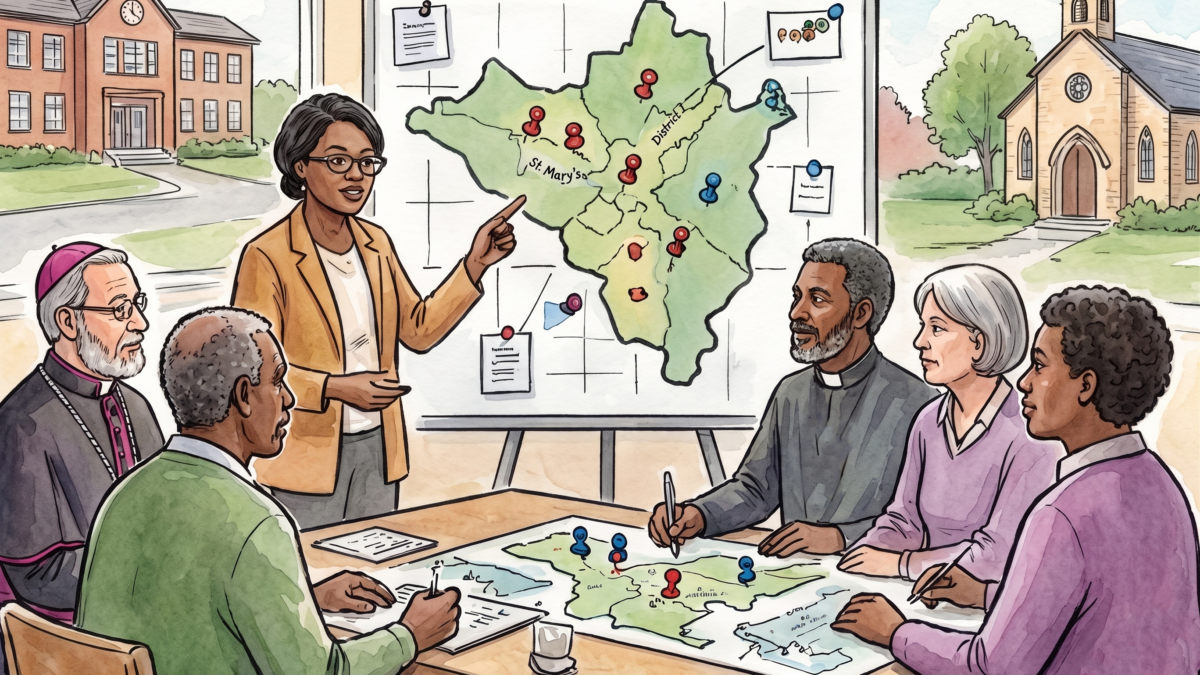
Racial Justice Training for Parish Leaders

Lesson 1 – History or Racial Justice in the Church
From the wealth of the slave trade to the 2020 global wake-up call, this timeline charts Britain’s journey with race. It highlights the Church’s shift from a “cold welcome” to declaring racism a sin, emphasizing that structural change requires moving beyond silence to active, local participation in God’s justice.

Lesson 2: Language of Racial Justice 
Developing racial justice literacy means moving from “goodwill” to active understanding. We must name systemic racism—bias within institutional rules—and unconscious bias, our hidden prejudices. Grounded in Imago Dei, this vocabulary transforms “tolerance” into a spiritual journey of metanoia, ensuring our parishes become true homes of Gospel-led belonging.

Lesson 3: Action of Racial Justice in the Church

Effective leadership moves from “inclusion” to “belonging”. Clergy must proactively diversify leadership, address biased remarks with Gospel-led clarity, and ensure liturgy reflects the universal Church. These practical principles transform the parish from a social club into a sanctuary where every member truly belongs.