
Blog

Thoughts and Upcomings are shared here.

Reclaiming Our Shared Humanity: A Catholic Response to the Southampton Tragedy

The murder of 18-year-old student Henry Nowak in Southampton has shaken our community. In the aftermath, false accusations of racism have caused more division and public anger. At The Racial Justice House, an initiative of the Catholic Association for Racial Justice (CARJ), we believe this difficult moment requires us to focus on the clear truths of Catholic Social Teaching.

Our faith teaches a vital principle: every single person is created in the image and likeness of God (Imago Dei). This means every human being has equal dignity, regardless of their race or background. When we say “All Lives Matter” in this context, we are affirming that human dignity belongs to everyone. It is absolute, and it can never be taken away.

Henry Nowak’s life mattered. He was a young man with a bright future whose life was cut short. Following this tragedy, his family made a courageous request.

“We do not want his story to create further division, hatred or tension. We want his story to make our street safer for everyone” 

To honour their wish, we must look to the Catholic principle of Solidarity. This reminds us that we are all part of one human family and we are responsible for each other. When one person suffers, the whole community grieves. True solidarity means we must not use a tragedy to attack any group. False claims of prejudice only damage the real work of fighting systemic racism.

True justice seeks the truth and protects the vulnerable. As a community, we must demand safer streets while rejecting anger and revenge.

Let us respond to the Southampton tragedy by remembering the value of every human soul. By seeing the image of God in every person, we can help build a society based on peace, respect, and justice for all.

WhatsApp Image 2026 05 20 at 21.33.56

Archbishop John Sherrington engages in ‘synodal dialogue’ with CARJ Merseyside at Bishop Eton, Liverpool

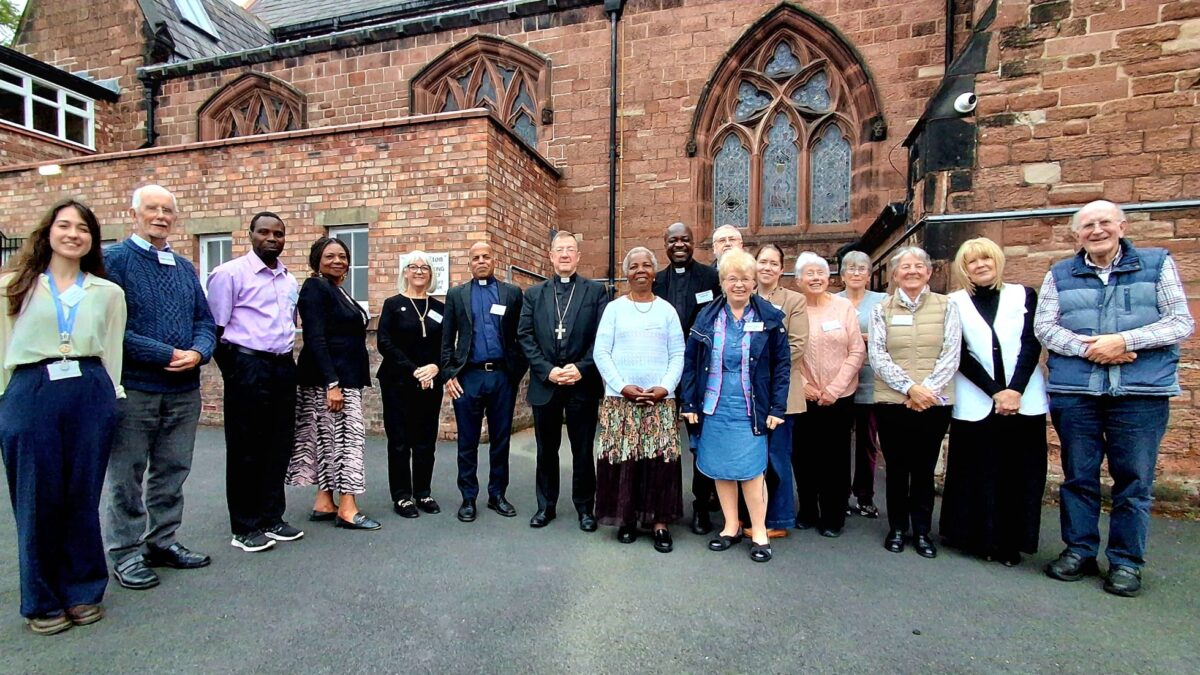
The true measure of a Christian shepherd is not found in the volume of his declarations, but in the depth of his listening. This was the striking reality witnessed on Wednesday evening, 20th May 2026, as the Most Rev. John Sherrington, Archbishop of Liverpool, sat down with the Catholic Association for Racial Justice (CARJ) Merseyside for a deeply collaborative and forward-thinking meeting at Our Lady of the Annunciation – Bishop Eton.

In a societal climate too often fractured by division, the encounter offered a powerful testament to a church leader choosing to engage in genuine dialogue and listen closely to the lived experiences of the flock he leads.

The evening opened with a profound sense of spiritual focus. Fr Anton Fernandopulle led the assembled activists and parishioners in an opening prayer that perfectly captured the urgency of their mission. With Pentecost approaching, the group invoked the Holy Spirit for a renewal of that apostolic fire for justice and truth.

They placed their dialogue under the heavenly intercession of Saint Martin de Porres and Saint Josephine Bakhita—saints whose holy lives proclaim mercy, freedom, and the equal worth of every child of God. Crucially, the prayer recalled the sobering teaching of the Church that

racism is a virus that quickly mutates and, instead of disappearing, goes into hiding and lurks in waiting,”  a truth meant to awaken the community to take courageous steps forward.

CARJ Merseyside—which has recently expanded its reach to coordinate advocacy across the wider region—sought this audience to invite leadership from the very top. As the organisers noted, whilst grassroots work is the lifeblood of parish renewal, true structural conversion requires an intentional, pastoral commitment from diocesan leadership.

Ann Malone, Chair of CARJ Merseyside, presented the first part of the strategic proposal, framing the discussion within a compelling statistical and theological reality. She highlighted that Global Majority communities are now the vibrant heart of urban Catholic life across Merseyside. With younger Catholics disproportionately coming from diverse ethnic backgrounds, the data made it refreshingly clear that the future vitality of the local Church rests entirely on how welcome, visible, and included these communities feel today. If the Church is to be truly universal, speakers noted, its structures must reflect the beautiful diversity of the People of God.

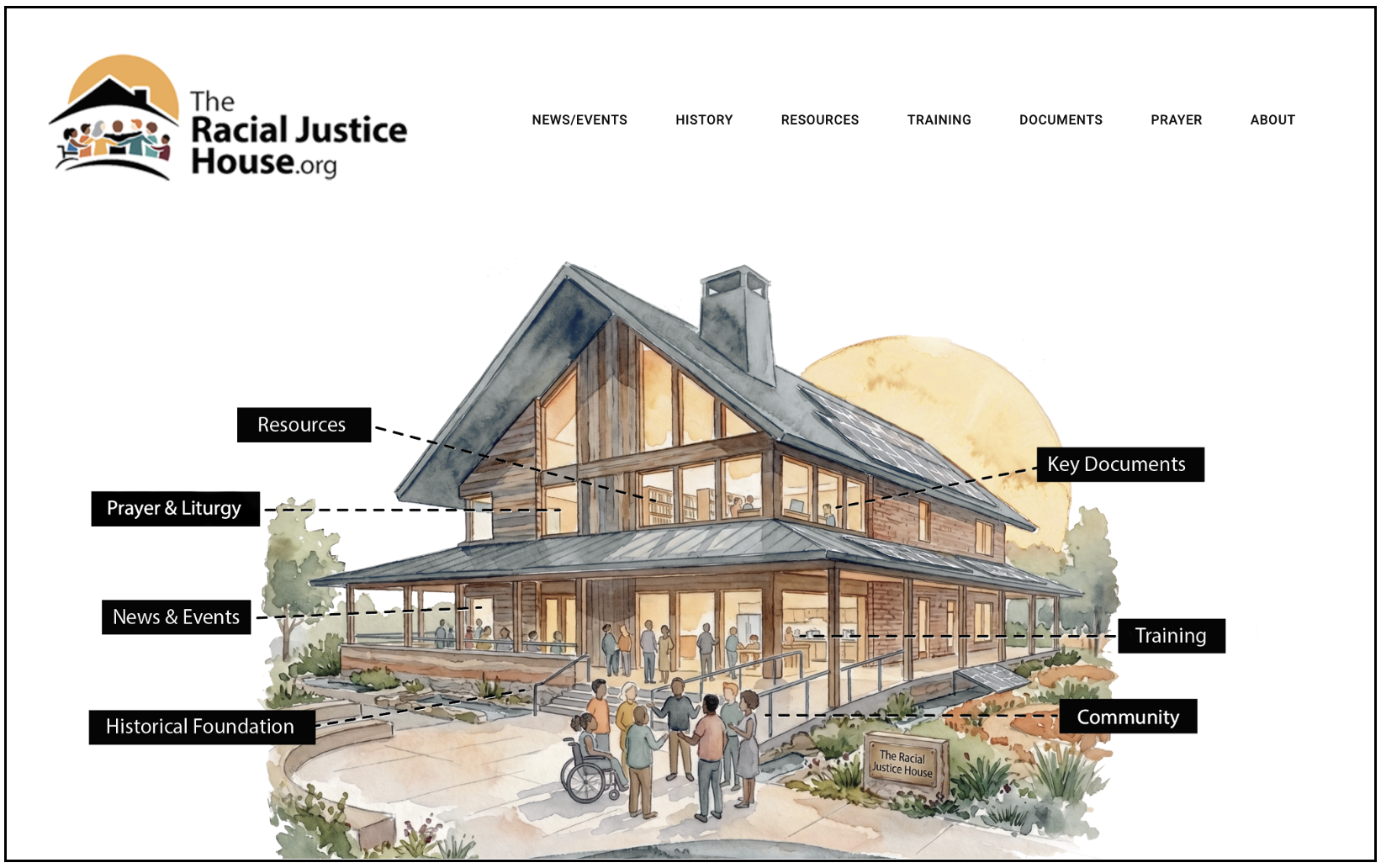
A major highlight of the evening was the introduction of a groundbreaking digital hub: The Racial Justice House (www.theracialjusticehouse.org). This comprehensive online platform serves as a pastoral blueprint and central archive for anti-racism work within the Church.
Screenshot 2026 05 20 at 23.21.38

Ingeniously structured around the physical metaphor of a house, the website organises resources into distinct rooms. Faithful visitors can explore theological foundations documents, access practical anti-racism toolkits for primary schools (firmly rooted in Catholic Social Teaching) in the classroom, and find parish action plans and frameworks in the rousource spaces. It is designed as an accessible tool to equip everyday Catholics with the formation needed to dismantle prejudice.

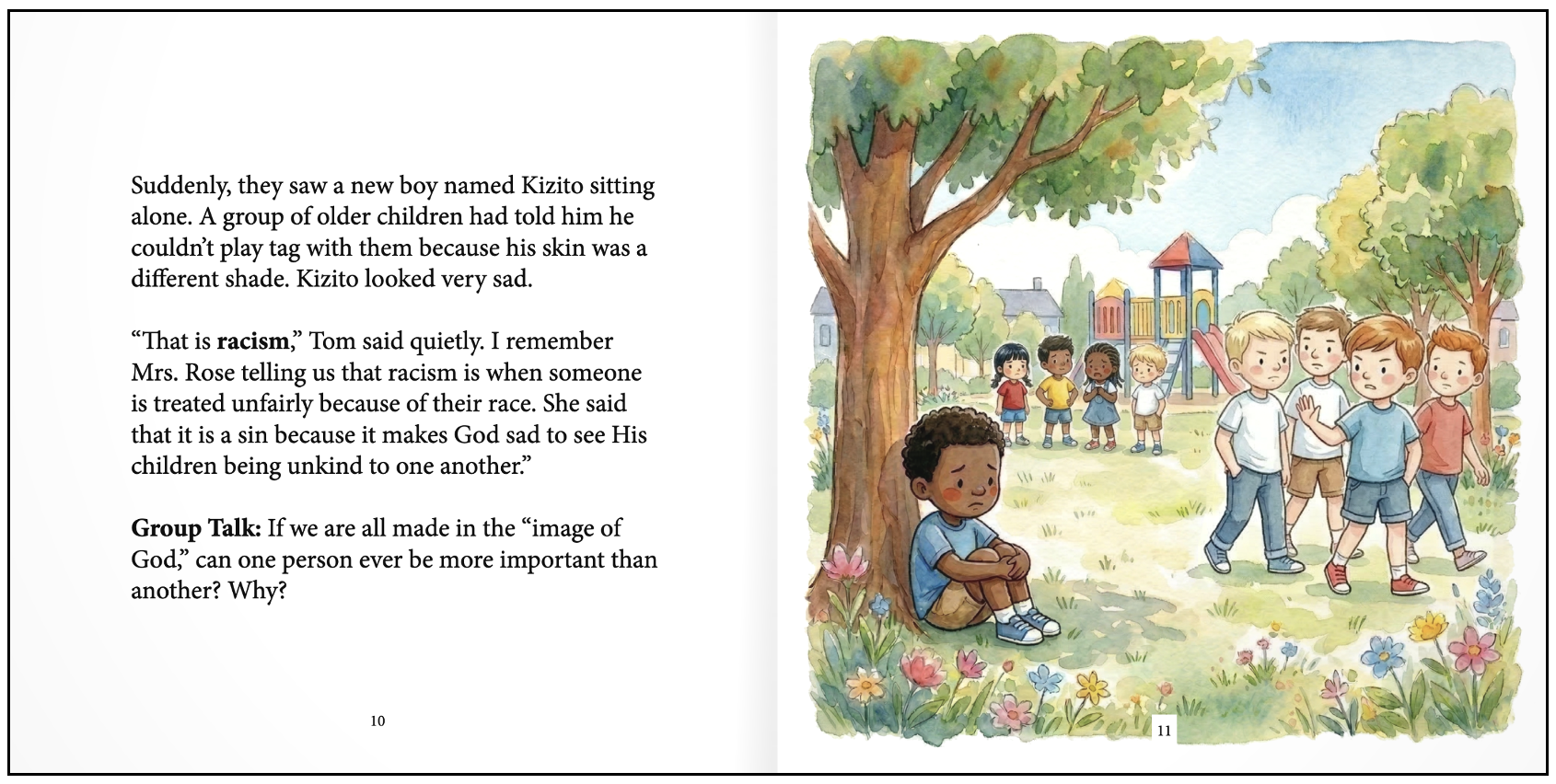
To give those present a tangible experience of the platform’s practical value, Tron Corner read aloud a beautifully illustrated storybook as a taster of the resources. The story follows four best friends—Mei, Tom, Amaka, and Arjun—who navigate complex concepts of race, ethnicity, and faith in an accessible, child-friendly way.
Screenshot 2026 05 20 at 23.18.43

When a new boy, Kizito, is excluded from playing tag by older children due to his skin colour, Tom remembers the example of St Peter Claver and steps up to practice anti-racism by inviting him to join them. Grounded in Genesis 1:27, the text reminds children that every person is born with a “full bucket” of human dignity because they are made in the image of God. Delegates noted it served as a powerful example of how the platform turns lofty theological ideals into everyday pastoral tools.

Following the digital walkthrough and story taster, Helen Cibinda Ntale presented the concrete action plan, laying out a comprehensive long-term strategy built upon three fundamental pillars: celebrating diversity, raising awareness, and driving meaningful structural reform. She shared moving examples of local grassroots initiatives already bearing fruit, such as ‘International Table’ events where parishioners share traditional food and heritage stories, alongside localised school projects that equip educators with anti-racism tools.

Throughout the detailed presentation, Archbishop John listened with profound attentiveness, capturing what attendees described as the true spirit of synodality—where pastors walk side-by-side with their communities. He then engaged in an authentic conversation, reflecting deeply on how the diocese can best cultivate and protect the shared baptismal dignity that unites all Catholics.

The evening concluded with a shared closing prayer, leaving all present with a profound sense of hope and a unified, dignified path forward for the Church in Merseyside.

Screenshot 2026 05 19 at 12.05.41

The Missionary Mandate in Diaspora: Bishop Mtumbuka’s Call to the UK Malawian Community

On Saturday, 16th May 2026, the historic walls of St Chad’s Cathedral in Birmingham did not just echo with traditional liturgy—they resonated with a profound, spirit-filled wake-up call to the Malawian diaspora. Catholics from across the United Kingdom gathered for their annual National Mass, presided over by the Right Reverend Martin Mtumbuka, Bishop of the Diocese of Karonga and President of the Episcopal Conference of Malawi.

In a beautiful demonstration of ecclesial communion, His Grace, the Most Reverend Bernard Longley, Archbishop of Birmingham, attended the celebration. By choosing to stay in Choir and generously lending his personal pastoral staff to Bishop Mtumbuka, Archbishop Longley set the stage for a message that would set the hearts of the faithful on fire with the Holy Spirit.


You Are Not Guests—You Are Missionaries!

The true climax of the celebration came when Bishop Mtumbuka delivered a powerful, uncompromising missionary mandate to the diaspora. Not holding back, the Bishop shattered the notion that Malawians are in the UK merely for economic survival, to blend quietly into the background, or simply to accumulate the material things of this world.

“Every confirmed Christian is a missionary,” the Bishop proclaimed. “You are not here to bury yourselves in isolation. You are here as agents of evangelisation!”

He reminded the congregation that their presence in the United Kingdom mimics the early Christians, who were scattered by circumstance but carried the living Word of God wherever they went. The Bishop directly challenged the diaspora to step out of the shadows, shake off the mildness that often keeps them quiet, and boldly stand up as vibrant witnesses to Jesus Christ.

Salt of the Earth: Re-Evangelising the West

Bishop Mtumbuka made it clear that the UK Malawian community is called to be the “salt of the earth,” explicitly tasked with re-evangelising a modern, secular Western society. He urged them to bring their raw, vibrant spiritual heritage into their local parishes—their uncompromised faith, their traditional devotions, and the rhythmic, soulful songs that echo the very heartbeat of Africa.

However, to be true missionaries, the Bishop warned that the community must live lives of absolute authenticity and integrity. He delivered a strong message on preserving the holiness of marriage vows, strongly admonishing anyone living double lives or keeping secret second families. Furthermore, he warned against the spiritual danger of material prosperity, urging the faithful not to “get lost” or desert the Catholic Church for local sects offering superficial emotional experiences.

True missionary fire, he insisted, requires holding fast to the uncompromised truth taught by scripture, tradition, and the parents and catechists back home.

A Beautiful, Living Witness

This fiery missionary spirit was perfectly mirrored in the beauty of the liturgy. The Mass seamlessly blended English with Chichewa, while the Bidding Prayers rose to heaven in different languages spoken across Malawi – Chichewa, Tumbuka, Lomwe, Yao, and Sena – uniting the tribes in a singular apostolic mission.

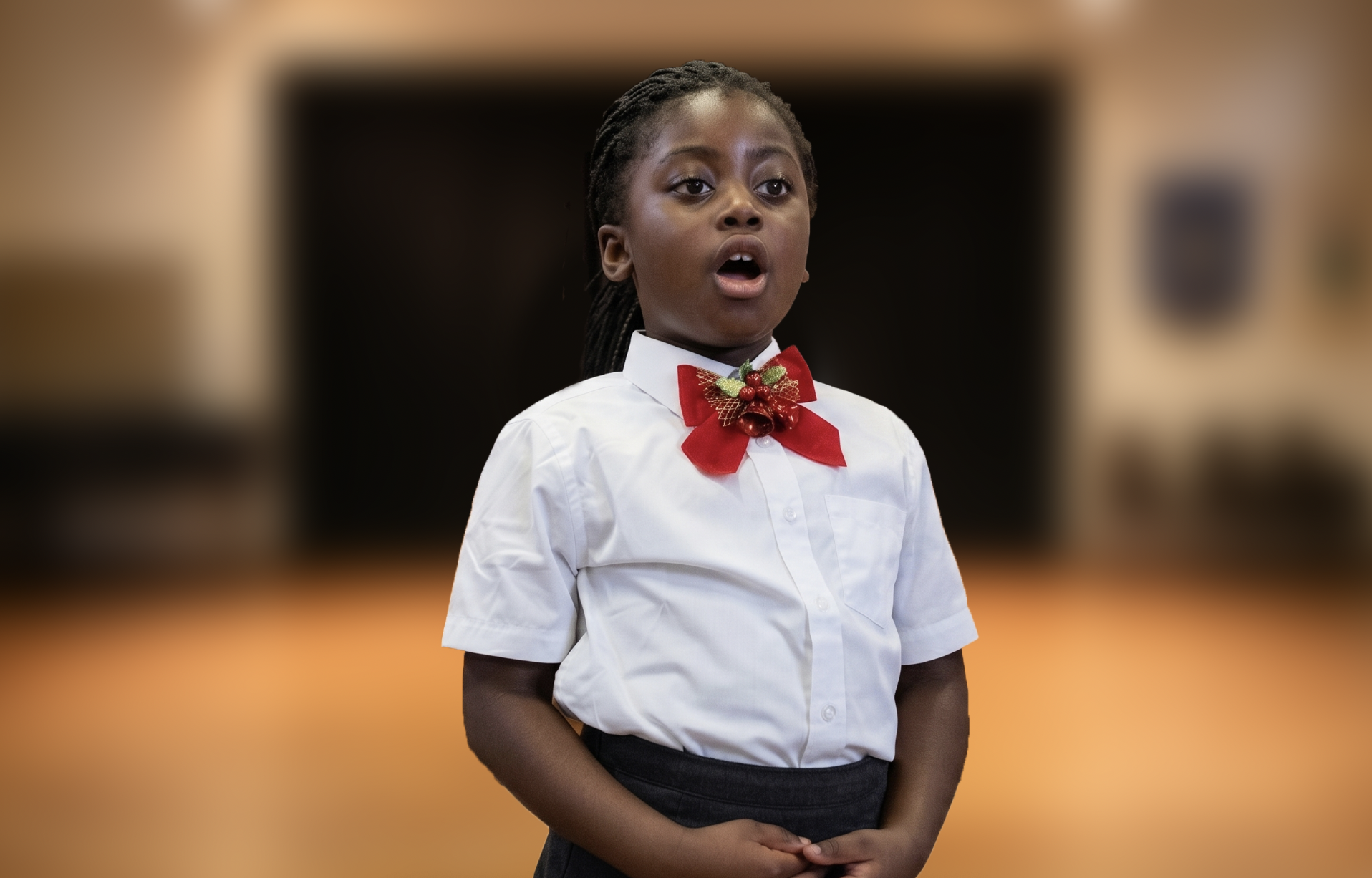
The cathedral was lifted by the angelic voice of Tiwungane Leoni Malewezi, a Malawian-British soprano in her first year at the Royal Academy of Music, who sang the responsorial psalm, “God is king of all the earth.” In a breath-taking moment of living tradition, the Book of the Gospels was balanced perfectly in a basket (Dengu) upon the head of a respected elder, Gogo Njerenje, and escorted by Ngoni warriors. This profound gesture symbolised the wisdom of the Holy Spirit being carried forward by the community—the very Word of God that Malawians are now called to proclaim to the streets of the UK.

A Fire That Cannot Be Hidden

Founded by Deacon Justin Malewezi, what began as a small gathering to honour the tragic passing of the late Vice President, the Honourable Dr Saulos Chilima, has now been set ablaze by the Holy Spirit. Celebrating their fifth major national gathering alongside weekly online prayer networks, the UK Malawian Catholic community has been sent forth, to proclaim the Gospel of the Lord!

Standing alongside Archbishop Longley, Bishop Mtumbuka urged that the diaspora become the “many hands, legs, and mouths” that the local hierarchy can rely upon to strengthen the Church. Under the maternal protection of Our Lady of Africa, the Malawian community left St Chad’s Cathedral no longer as residents in a foreign country, but as a missionary army set on fire to bring richness, diversity, and the living Gospel to England and Wales.

A Diaspora Voice at St Chad’s: Royal Academy Soprano Tiwungane Leoni Malewezi Welcomes Malawian Bishops

BIRMINGHAM — A historic gathering of the UK’s Malawian Catholic community at St Chad’s Cathedral on Saturday 16th May was marked by a deeply moving liturgical contribution from rising operatic talent Tiwungane Leoni Malewezi.

The special Mass, celebrated by the Right Reverend Martin Mtumbuka, Bishop of Karonga and Chairman of the Episcopal Conference of Malawi (ECM), brought together hundreds of the diaspora faithful. In a profound display of ecclesial communion, the resident Archbishop of Birmingham, the Most Reverend Bernard Longley, also attended, sitting in choir to honour the visiting prelate and the Malawian community.

For Malewezi, a first-year undergraduate soprano at the prestigious Royal Academy of Music in London, the liturgy was a profound spiritual responsibility. Entrusted as the cantor to lead the Responsorial Psalm, she effectively carried the prayers and devotion of the entire UK Malawian Catholic diaspora through her voice. At The Racial Justice House, we view platforms and sanctuaries as places where the voices of the marginalised must be intentionally elevated. Leoni’s role on 16th May was a living embodiment of this mission. In leading the Responsorial Psalm, she did not just sing; she carried the prayers, the history, and the faithful devotion of the entire UK Malawian Catholic diaspora.


From Cathedral Chorister to the National Stage
Malewezi’s musical journey began early at Holy Cross Primary School in South Ockendon, Essex, where teachers first identified her rare vocal gift. Her musical and spiritual formation deepened significantly when her family relocated to the North West. Attending St Edward’s Catholic College in Liverpool—a school renowned for its choral tradition—she developed her technical foundations as a chorister within the Liverpool Archdiocese.

Family members recall that when she originally auditioned for the cathedral choir and was asked about her motivations, her response was instant and singular:

“I want to be chorister because music is my life.”

Her upbringing gave her a unique dual identity. Born in the UK but having spent part of her pre-school years in Malawi, she bridges two worlds. Furthermore, she carries a significant national legacy; she is the granddaughter of Malawi’s late first Vice President, the Right Honourable Dr. Justin Malewezi, and the daughter of Reverend Deacon Justin and Dr. Emmie Malewezi of the Liverpool Archdiocese. Her very names reflect this heritage: Tiwungane meaning “together as an anthill” in a reflection of community unity, and Leoni inheriting the name of her great-grandmother, Leonie Chizalema.

The Theology of the Voice
Saturday’s high-profile liturgy in Birmingham represents the latest milestone in a musical calling that Malewezi views strictly as a ministry. Her father, Deacon Malewezi, notes that her perspective was permanently shaped during her early years as an archdiocesan chorister.

After singing the Psalms during an evening prayer service at the cathedral years ago, a young Leoni noticed an elderly congregant weeping continuously in the pews. When she later asked her father why the music had caused her to cry, he explained that her voice was merely a conduit. The Holy Spirit was using her voice as a vessel to deliver God’s message directly to the hearts of the congregation.

This philosophy of serving as a spiritual conduit remains the anchor of her career. Despite the intense competitive pressures of securing a place at the Royal Academy of Music following her A-Levels, Malewezi attributes her success to a rigorous combination of disciplined hard work and persistent prayer.

Future Horizons: The Sanctuary and the Opera House
As a young Black classical artist navigating the elite conservatoire circuit in London, Malewezi represents a vibrant future for both the classical music industry and the contemporary Church.

Her long-term ambitions remain twofold. Whilst she aspires to perform professionally on the international opera stage, she remains resolutely committed to her calling within the sanctuary, ensuring her voice continues to serve the Church that formed her.

Reflecting on the success of the 16th May liturgy, community organisers expressed immense pride in her representation, viewing her flawless leading of the Psalm as a testament to the strength, faith, and cultural richness of the Malawian Catholic community in the United Kingdom.

Social Media Feature:
To follow Tiwungane Leoni Malewezi’s ongoing musical journey, classical recitals, and university life at the Royal Academy of Music, follow her official Instagram account: @leonimalewezi

Out of Many, One People of God

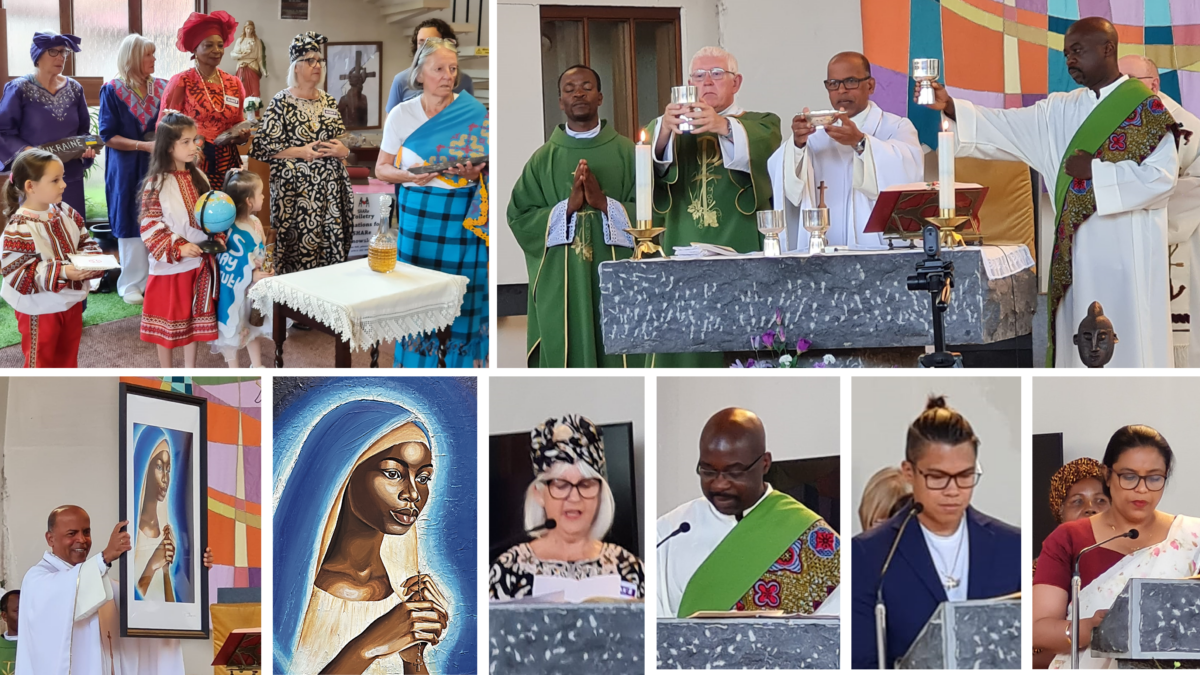
A Joyful Celebration of the International Table Liturgy in Huyton
It was a day filled with color, culture, and community spirit as the parish of Sts. Agnes and Aidan Catholic Church in Huyton, Liverpool, celebrated its annual International Table Liturgy on the 10th of August 2025. The church, beautifully adorned with flags from around the world, stood as a vibrant reminder of the rich tapestry of faith within its congregation.

The celebration began with a stirring opening hymn sung in both Spanish and English, immediately setting the tone for a truly international gathering. Parishioners came dressed in traditional attire representing their countries of origin, their clothing creating rainbow colors and kaleidoscopic patterns that added to the visual beauty and festive spirit of the day.

The Mass was presided over by parish priest Fr. Anton Fernandopulle, who was joined by Frs. Richard Sloan and Moses, along with Deacons Justin Malewezi and Michael Whelan. Deacon Justin delivered a deeply moving and reflective homily and spoke of diversity, focusing on the presence of Our Lady in various cultures around the world. He spoke about how Mary reveals herself in different ways, as a mother who embraces each culture and ethnicity with tenderness and love. He also shared a piece of his own artwork: a striking image of Our Lady of Africa, which deeply resonated with the congregation.

The Bidding Prayers were read in six different languages, reminding all present of the parish’s diversity and global unity in Christ. The Offertory procession was one of the highlights of the celebration—an explosion of color and culture. Parishioners, including many children in national costumes, presented offerings that included beautifully crafted wooden carvings and symbolic items from various nations. The offertory hymn was sung in Sinhala, one of the languages of Sri Lanka, and the Sanctus followed in French. The Lord’s Prayer was led in Tagalog by a Filipino parishioner, offering yet another moment of cultural beauty and inclusivity as the parish family prayed together.

During the Sign of Peace, the congregation joined in a joyful South African peace chorus, moving together in celebration and unity. It was a powerful expression of the joy and love that defines the Body of Christ.

At the conclusion of the Mass, Fr. Anton warmly thanked all who attended and expressed his gratitude to the many volunteers who made the celebration possible. He extended a special welcome to newcomers, including Lucy Rauer, Catholic Social Action Coordinator for the Archdiocese of Liverpool, who joined the community for the first time.

After the liturgy, parishioners gathered outside in the sunshine to share an international feast. Dishes from around the globe were served, with the air filled with the smell and taste of international foods. It was a true celebration of cultures, friendships, and shared faith, all accompanied by music, laughter, and the sharing of stories and recipes.

This year’s International Table Liturgy was more than a joyful celebration—it was a powerful witness to the unity we share as one people of God, brought together through faith, enriched by our differences, and united in Christ’s love.

by CARJ collective of St Agnes & St Aidan

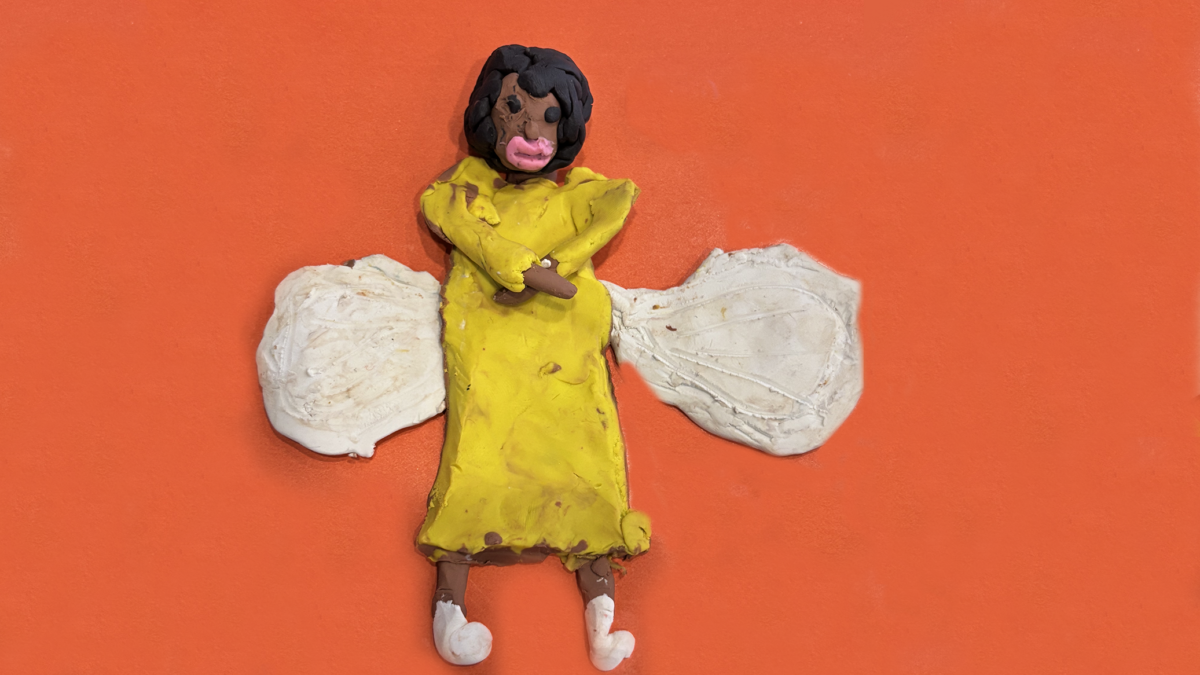
“I Have Never Seen a Black Angel, so I made one”

When we talk about “welcoming parishes”, our minds often go to the practicalities: a warm smile at the door, a clear newsletter, or an accessible ramp. But true belonging goes much deeper than a greeting. It is found in the silent language of the walls around us.

On 12 April 2025, during a creative workshop held in response to Archbishop Malcolm’s call for racial justice in the Liverpool diocese, a nine-year-old participant pinpointed the heart of the matter with a single, striking observation:

“I have never seen a black angel, so I made one.”

This moment of clarity led to the the catalyst for a new way of thinking about how we build inclusive communities.

The Architecture of Belonging
If a child enters a church and never sees a face, a saint, or a messenger of God that looks like them, the message—however unintentional—is that they are a guest in someone else’s home, rather than a member of their own family.

To move from “polite” to “truly welcoming”, Racial Justice Networks and the Parish Action Plans must shift the focus towards intentional imagery. Here are some ideas from the workshop to transform our sacred spaces:

1. The “Black Angel” Principle
The observation made by our youngest participant is a guiding principle. We are encouraging parishes to audit their visual environment with fresh eyes.

    • Whose faces are on your walls? Do the statues, stained glass, and icons reflect the global reality of the Catholic Church?
    • Creating the Missing: Like the Queen of Africa painting, parishes are being invited to commission or create new art that celebrates the diverse beauty of the human family.

2. Art as a Roadmap for Justice
Our Lady of Africa is more than a painting; it is a visual manifesto. Under the Parish Action Plan, art is being used to:

    • Spark Dialogue: Using diverse imagery as a starting point for “listening sessions” about representation and identity.
    • Catechise Through Beauty: Remining us that the Imago Dei (the Image of God) is not restricted to one race or culture.

Moving Towards a Visual Welcome
A welcoming parish is one where every person can look at a depiction of the sacred and see a reflection of their own inherent dignity.

By taking the lead from a nine-year-old’s insight, the Liverpool diocese is ensuring that the “Quick Guide for Parishes” isn’t just a booklet on a shelf, but a living, breathing transformation of our environment. We are building a Church where no child ever has to wonder why the angels don’t look like them—because they will have helped paint the wings themselves.

Look at your parish walls with fresh eyes.

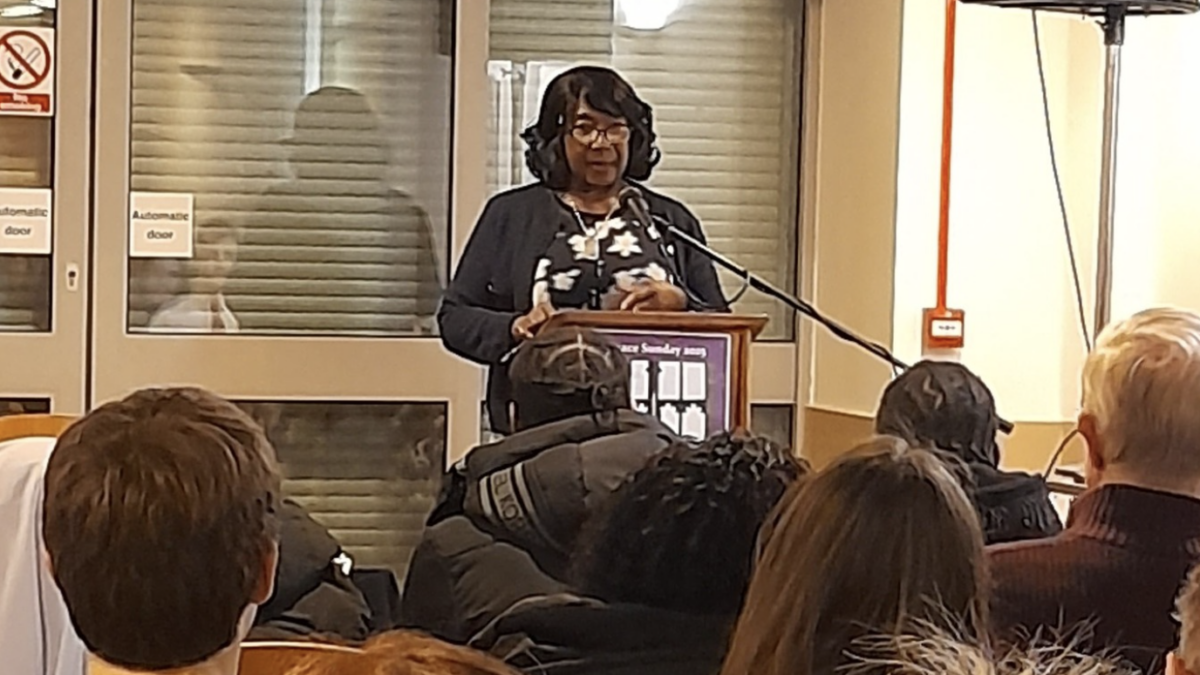
A Mother’s Forgiveness: Reflecting on an Evening with Dr Gee Walker

Many from the Liverpool community had the profound privilege of attending a talk by Dr Gee Walker entitled ‘A Mother’s Forgiveness’. It was a moving, challenging, and ultimately transformative experience to hear directly from a woman who has turned an unimaginable tragedy into a lifelong mission for peace and racial justice.

Remembering Anthony Walker
To understand the weight of Dr Walker’s words, one must remember the life of her son, Anthony. Anthony Walker was a bright, well-regarded 18-year-old with a promising future. He was a keen basketball player and a devout Christian who dreamed of becoming a lawyer.

In July 2005, his life was cruelly cut short in Huyton, Merseyside. Anthony was waiting at a bus stop with his girlfriend and cousin when they were targeted with racial abuse. Attempting to avoid a confrontation, they walked toward a local park, only to be ambushed. Anthony was murdered in an unprovoked, horrific attack by a gang of racist thugs. It was a crime that shocked the nation and laid bare the devastating reality of hate in our society.

Forgiveness as Survival
During her talk, Dr Walker was clear: forgiveness is not about forgetting, nor is it about excusing the inexcusable. “Forgiveness doesn’t mean I’m in denial,” she explained. “I’m not saying it was OK to hurt my son.” Instead, she described forgiveness as a mechanism for endurance. “You don’t have to be religious to forgive, but to forgive is about survival.”

She spoke candidly about the lived experience of people of colour, noting that the journey toward forgiveness often begins long before a tragedy occurs. “The awkward stares. The bias. The verbal abuse. We get attacked. These are the things we live every day.”

Lessons for Our Community
Dr Walker’s insights provided us with a roadmap for how we approach racial justice and reconciliation today. Some of the most poignant extracts from her talk included:

 “Grief is a journey. It’s a cycle. It’s repetitive and there is no escaping it.”

“We cannot fix what we don’t understand.”

 “Reconciliation and positive justice. We must build and restore relationships, but we need the tools, faith, and hope to change.”

“Forgiveness is above all. It’s a personal decision of the heart. It goes against the natural instinct.”

A Legacy of Light
The work of the Anthony Walker Foundation continues to be a beacon of hope, working tirelessly to promote racial harmony and support victims of hate crime. Dr Walker’s philosophy echoes the timeless wisdom of leaders like Martin Luther King Jr., who famously said, “Darkness cannot drive out darkness; only light can. Hate cannot drive out hate; only love can.”

As we reflect on this talk, we are reminded that pursuing racial justice is not just about policy change, but about the radical, difficult work of the heart. We left the evening inspired by Dr Walker’s resilience and more committed than ever to building a world where hate has no home.

To learn more about the ongoing work to tackle racism and support those affected by hate crime, please visit the Anthony Walker Foundation.