Category: News

Out of Many, One People of God

A Joyful Celebration of the International Table Liturgy in Huyton
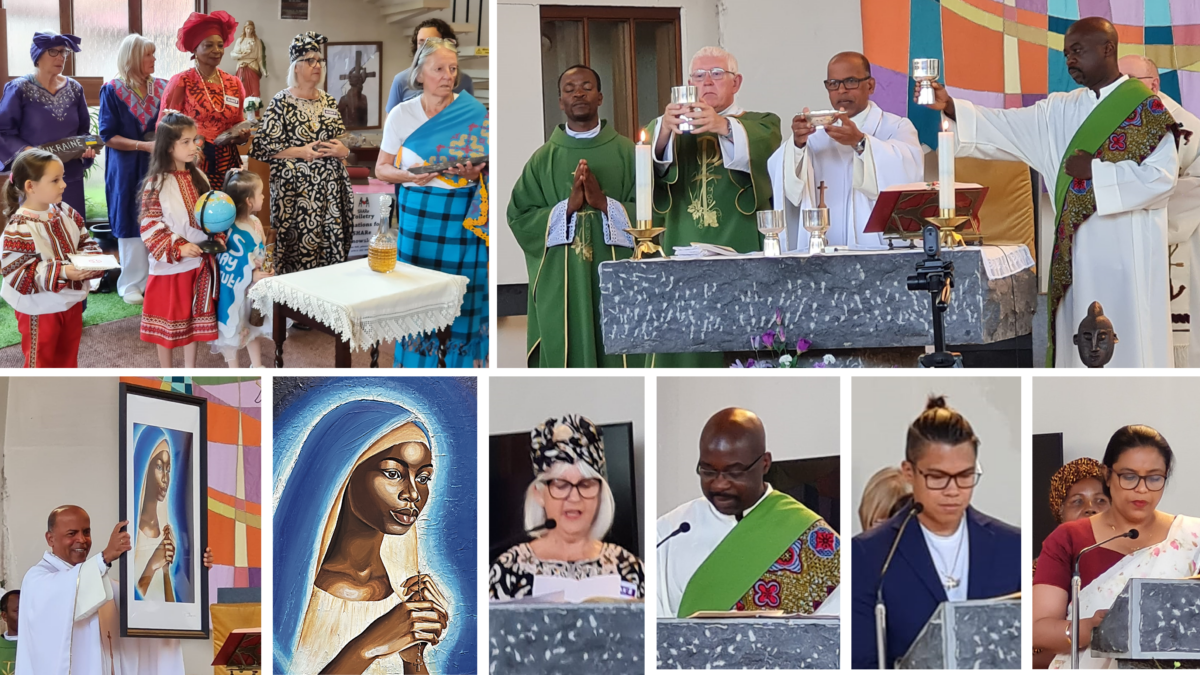
It was a day filled with color, culture, and community spirit as the parish of Sts. Agnes and Aidan Catholic Church in Huyton, Liverpool, celebrated its annual International Table Liturgy on the 10th of August 2025. The church, beautifully adorned with flags from around the world, stood as a vibrant reminder of the rich tapestry of faith within its congregation.

The celebration began with a stirring opening hymn sung in both Spanish and English, immediately setting the tone for a truly international gathering. Parishioners came dressed in traditional attire representing their countries of origin, their clothing creating rainbow colors and kaleidoscopic patterns that added to the visual beauty and festive spirit of the day.

The Mass was presided over by parish priest Fr. Anton Fernandopulle, who was joined by Frs. Richard Sloan and Moses, along with Deacons Justin Malewezi and Michael Whelan. Deacon Justin delivered a deeply moving and reflective homily and spoke of diversity, focusing on the presence of Our Lady in various cultures around the world. He spoke about how Mary reveals herself in different ways, as a mother who embraces each culture and ethnicity with tenderness and love. He also shared a piece of his own artwork: a striking image of Our Lady of Africa, which deeply resonated with the congregation.

The Bidding Prayers were read in six different languages, reminding all present of the parish’s diversity and global unity in Christ. The Offertory procession was one of the highlights of the celebration—an explosion of color and culture. Parishioners, including many children in national costumes, presented offerings that included beautifully crafted wooden carvings and symbolic items from various nations. The offertory hymn was sung in Sinhala, one of the languages of Sri Lanka, and the Sanctus followed in French. The Lord’s Prayer was led in Tagalog by a Filipino parishioner, offering yet another moment of cultural beauty and inclusivity as the parish family prayed together.

During the Sign of Peace, the congregation joined in a joyful South African peace chorus, moving together in celebration and unity. It was a powerful expression of the joy and love that defines the Body of Christ.

At the conclusion of the Mass, Fr. Anton warmly thanked all who attended and expressed his gratitude to the many volunteers who made the celebration possible. He extended a special welcome to newcomers, including Lucy Rauer, Catholic Social Action Coordinator for the Archdiocese of Liverpool, who joined the community for the first time.

After the liturgy, parishioners gathered outside in the sunshine to share an international feast. Dishes from around the globe were served, with the air filled with the smell and taste of international foods. It was a true celebration of cultures, friendships, and shared faith, all accompanied by music, laughter, and the sharing of stories and recipes.

This year’s International Table Liturgy was more than a joyful celebration—it was a powerful witness to the unity we share as one people of God, brought together through faith, enriched by our differences, and united in Christ’s love.

by CARJ collective of St Agnes & St Aidan
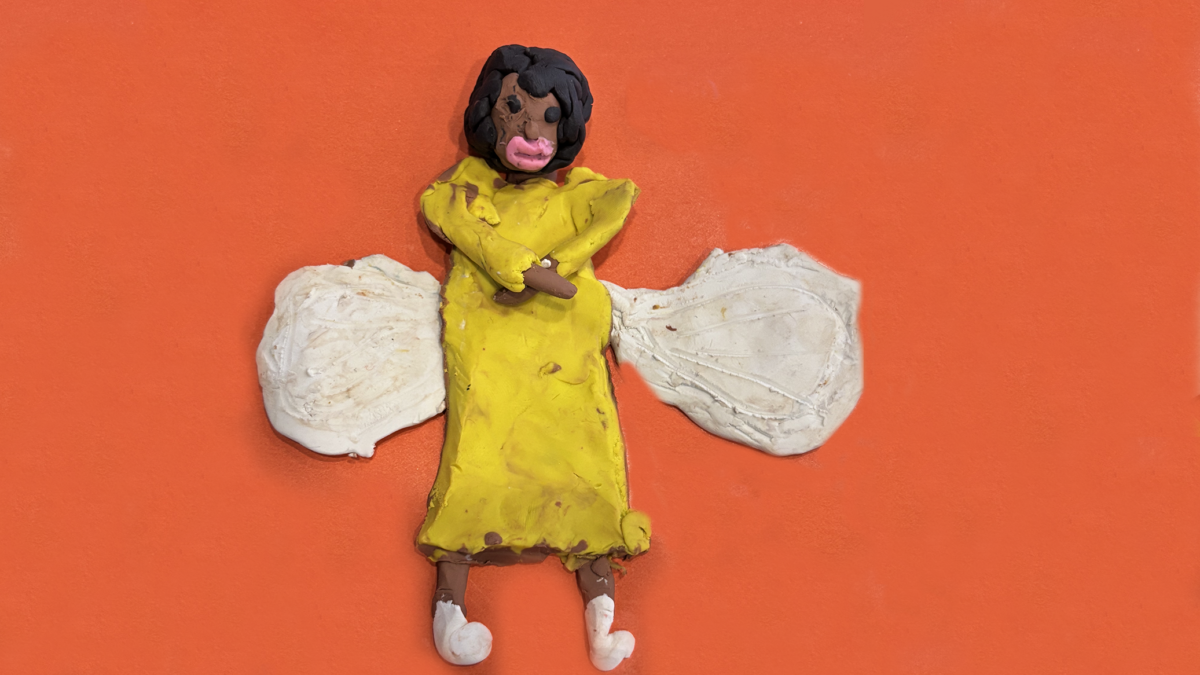
“I Have Never Seen a Black Angel, so I made one”

When we talk about “welcoming parishes”, our minds often go to the practicalities: a warm smile at the door, a clear newsletter, or an accessible ramp. But true belonging goes much deeper than a greeting. It is found in the silent language of the walls around us.

On 12 April 2025, during a creative workshop held in response to Archbishop Malcolm’s call for racial justice in the Liverpool diocese, a nine-year-old participant pinpointed the heart of the matter with a single, striking observation:

“I have never seen a black angel, so I made one.”

This moment of clarity led to the the catalyst for a new way of thinking about how we build inclusive communities.

The Architecture of Belonging
If a child enters a church and never sees a face, a saint, or a messenger of God that looks like them, the message—however unintentional—is that they are a guest in someone else’s home, rather than a member of their own family.

To move from “polite” to “truly welcoming”, Racial Justice Networks and the Parish Action Plans must shift the focus towards intentional imagery. Here are some ideas from the workshop to transform our sacred spaces:

1. The “Black Angel” Principle
The observation made by our youngest participant is a guiding principle. We are encouraging parishes to audit their visual environment with fresh eyes.

    • Whose faces are on your walls? Do the statues, stained glass, and icons reflect the global reality of the Catholic Church?
    • Creating the Missing: Like the Queen of Africa painting, parishes are being invited to commission or create new art that celebrates the diverse beauty of the human family.

2. Art as a Roadmap for Justice
Our Lady of Africa is more than a painting; it is a visual manifesto. Under the Parish Action Plan, art is being used to:

    • Spark Dialogue: Using diverse imagery as a starting point for “listening sessions” about representation and identity.
    • Catechise Through Beauty: Remining us that the Imago Dei (the Image of God) is not restricted to one race or culture.

Moving Towards a Visual Welcome
A welcoming parish is one where every person can look at a depiction of the sacred and see a reflection of their own inherent dignity.

By taking the lead from a nine-year-old’s insight, the Liverpool diocese is ensuring that the “Quick Guide for Parishes” isn’t just a booklet on a shelf, but a living, breathing transformation of our environment. We are building a Church where no child ever has to wonder why the angels don’t look like them—because they will have helped paint the wings themselves.

Look at your parish walls with fresh eyes.

A Mother’s Forgiveness: Reflecting on an Evening with Dr Gee Walker

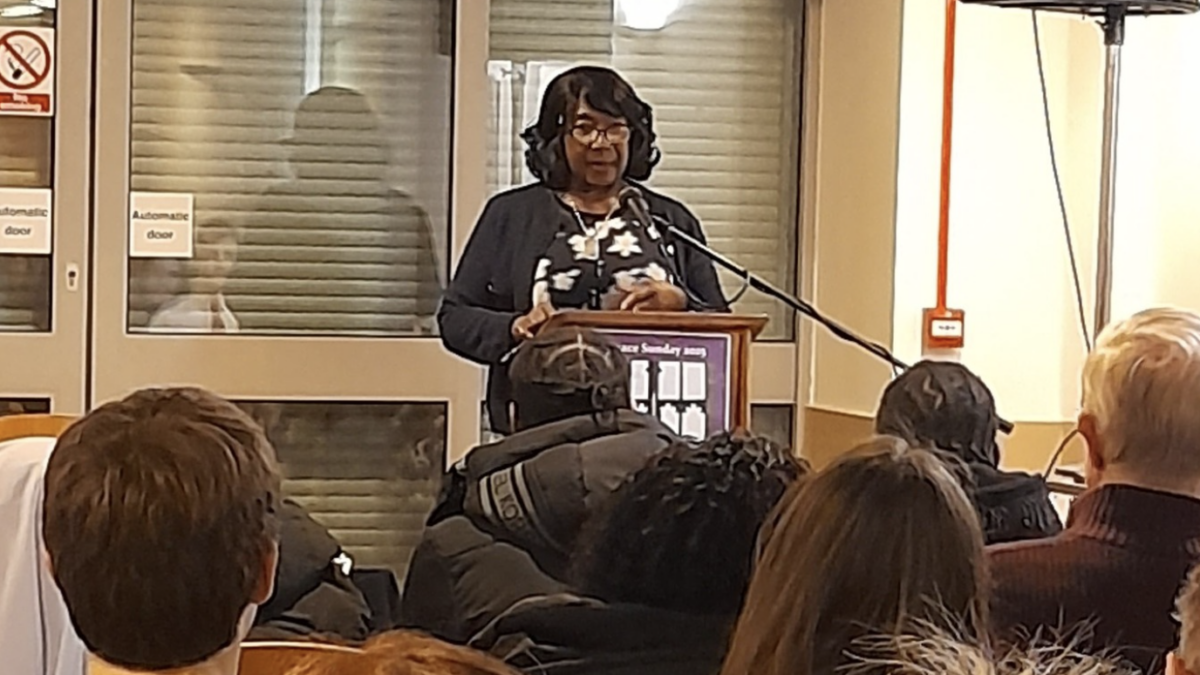
Many from the Liverpool community had the profound privilege of attending a talk by Dr Gee Walker entitled ‘A Mother’s Forgiveness’. It was a moving, challenging, and ultimately transformative experience to hear directly from a woman who has turned an unimaginable tragedy into a lifelong mission for peace and racial justice.

Remembering Anthony Walker
To understand the weight of Dr Walker’s words, one must remember the life of her son, Anthony. Anthony Walker was a bright, well-regarded 18-year-old with a promising future. He was a keen basketball player and a devout Christian who dreamed of becoming a lawyer.

In July 2005, his life was cruelly cut short in Huyton, Merseyside. Anthony was waiting at a bus stop with his girlfriend and cousin when they were targeted with racial abuse. Attempting to avoid a confrontation, they walked toward a local park, only to be ambushed. Anthony was murdered in an unprovoked, horrific attack by a gang of racist thugs. It was a crime that shocked the nation and laid bare the devastating reality of hate in our society.

Forgiveness as Survival
During her talk, Dr Walker was clear: forgiveness is not about forgetting, nor is it about excusing the inexcusable. “Forgiveness doesn’t mean I’m in denial,” she explained. “I’m not saying it was OK to hurt my son.” Instead, she described forgiveness as a mechanism for endurance. “You don’t have to be religious to forgive, but to forgive is about survival.”

She spoke candidly about the lived experience of people of colour, noting that the journey toward forgiveness often begins long before a tragedy occurs. “The awkward stares. The bias. The verbal abuse. We get attacked. These are the things we live every day.”

Lessons for Our Community
Dr Walker’s insights provided us with a roadmap for how we approach racial justice and reconciliation today. Some of the most poignant extracts from her talk included:

 “Grief is a journey. It’s a cycle. It’s repetitive and there is no escaping it.”

“We cannot fix what we don’t understand.”

 “Reconciliation and positive justice. We must build and restore relationships, but we need the tools, faith, and hope to change.”

“Forgiveness is above all. It’s a personal decision of the heart. It goes against the natural instinct.”

A Legacy of Light
The work of the Anthony Walker Foundation continues to be a beacon of hope, working tirelessly to promote racial harmony and support victims of hate crime. Dr Walker’s philosophy echoes the timeless wisdom of leaders like Martin Luther King Jr., who famously said, “Darkness cannot drive out darkness; only light can. Hate cannot drive out hate; only love can.”

As we reflect on this talk, we are reminded that pursuing racial justice is not just about policy change, but about the radical, difficult work of the heart. We left the evening inspired by Dr Walker’s resilience and more committed than ever to building a world where hate has no home.

To learn more about the ongoing work to tackle racism and support those affected by hate crime, please visit the Anthony Walker Foundation.